Hamas accepts Trump’s Gaza disarmament plan in principle – official (VIDEOS)
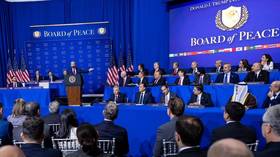
Palestinian militant group Hamas has agreed to completely disarm in Gaza under US President Donald Trump’s Board of Peace plan, although Israel must also meet a series of conditions as part of the agreement, according to a senior official.
Ghazi Hamad, a member of the Hamas negotiating delegation, confirmed to Al Jazeera on Friday that an agreement has been reached, adding that an official statement will be released soon.
“These negotiations were difficult and hard, and we tried to reach the best possible formula that was achievable,” Hamad, whose remarks were also carried by Reuters and the BBC, was cited as saying. He stressed, however, that Israel must approve the phased disarmament, adding that Hamas will not implement any part of the agreement unless Israeli forces fulfilled their obligations, particularly withdrawing from Gaza and advancing reconstruction in the Palestinian territory.
“We will not take any action regarding disarmament prior to Israel’s withdrawal from the [Gaza] Strip,” he stated.
Hamad also told the BBC that the group insists on the wording “inventorying and storing weapons” under Palestinian oversight rather than handing them over to Israel.
Trump breaks the news
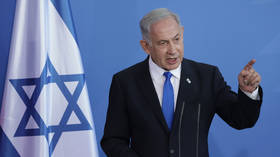
The news first emerged when Trump announced on Truth Social on Thursday that his Board of Peace has reached a “historic agreement” on the complete disarmament of Hamas and every other armed group in Gaza, calling it a “monumental step toward lasting peace and security” and a major milestone in his 20-point plan for the enclave.
“The agreement will be carried out in carefully structured phases,” the US president wrote. “As disarmament is completed, Israeli forces will withdraw, and the International Stabilization Force will work with a new Palestinian police force to take responsibility for Gaza being safe for its residents and its neighbors.”
Trump said Gaza would eventually be governed by a “new Palestinian government” working closely with the Board of Peace. He thanked Egypt, Qatar, and Türkiye for mediating the talks, insisting the territory would no longer be allowed to serve as a base for attacks against Israel.
Board of Peace Director-General and High Representative for Gaza Nickolay Mladenov confirmed the breakthrough in a post on X.
“Today, agreement has been reached on the decommissioning of weapons and civilian transition in Gaza. It took months of very difficult negotiations to get here,” he wrote, adding that there were several moments when he “did not believe we would make it” and insisting the Israeli withdrawal “must move in lockstep” with Hamas decommissioning.
Today, agreement has been reached on the decommissioning of weapons and civilian transition in Gaza. It took months of very difficult negotiations to get here. There were several points when I did not believe we would make it... What the agreement says matters. What happens next…
— Nickolay E. MLADENOV (@nmladenov) July 31, 2026
Reports published shortly before Trump’s announcement, however, suggested significant details remain unresolved. Hamas reportedly wants to retain “personal” small arms, while heavy weapons would be stored under the supervision of a Palestinian body rather than destroyed. It also seeks amnesty for members of the disbanded armed formations and wants the process synchronized with an Israeli withdrawal rather than surrendering all weapons in exchange for a promise that Israeli troops would later leave.
It is realistic to expect Hamas to disarm now that the group has “made the strategic decision” to do so, Ramallah-based journalist Mohammed Najib told RT. He added, however, that the reported deal can only succeed if it is backed by international guarantees and Israel follows through on its commitments.
”Hamas concluded that no construction can take place in Gaza if it continues to reject the disarmament. So they agree to this issue,” he said, adding that “as this agreement was declared by US President Donald Trump, Netanyahu cannot say no to it.”
Saad Nimr, a professor of political science at Birzeit University, also argued that Hamas is unlikely to give up its weapons before Israel begins withdrawing from Gaza, as the group no longer trusts Israel to honor ceasefire commitments.
“The more Israel gets out of Gaza, the more Hamas will give up their weapons,” he told RT, arguing that any disarmament would have to happen in parallel with an Israeli pullout.
Israel’s reaction
Earlier in the day, unnamed sources told Reuters that talks in Cairo between mediators and Hamas leaders on implementing the Gaza peace plan had made rare progress, though an Israeli official said the proposed terms were not satisfactory. Following Trump’s announcement, the Times of Israel reported, citing an unnamed source, that the agreement had been signed by Hamas negotiators, the board, and the mediating countries, but that “the Israeli office” issued a statement saying the disarmament proposal did not meet Israel’s demands.
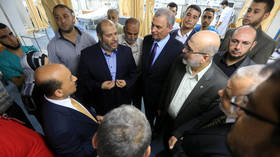
Israel has yet to comment officially, although members of the government have already voiced skepticism and opposition.
“Israel says it will not take any action until Hamas is disarmed with its weapons, tunnels and infrastructure and we all understand the complexity of this,” Moshe Sa’ada of Israeli Prime Minister Benjamin Netanyahu’s Likud party told public broadcaster Kan News. “Hamas is already saying that it’s the other way around: that it expects Israel to withdraw and only afterwards it will disarm.” Sa’ada added that he still believed there would ultimately be “no other option” in Gaza “apart from military rule and end-to-end occupation.”
Right-wing National Security Minister Itamar Ben-Gvir also blasted the emerging deal before Trump’s social media post.
“You only talk with Nazis through the crosshairs – and no other way,” he wrote on X. “The only solution in Gaza to which Israel is willing to be a partner is encouraging emigration and destroying Hamas.”
An official told the BBC that if Israel decides not to withdraw as part of the peace plan, Trump would be “very disappointed.”
The announcement came as Israeli strikes continued across Gaza despite the ceasefire introduced last October. The Gaza Health Ministry said hospitals received the bodies of six people on Thursday, along with 34 wounded patients. The dead reportedly included an eight-year-old child killed in a strike on a displacement camp in Khan Younis and an 18-month-old baby killed when a home in the Bureij refugee camp was bombed. According to Gaza health authorities, at least 73,341 Palestinians have been killed and more than 174,000 wounded since Israel launched its military campaign in retaliation for the deadly Hamas raid of October 2023.

Trump’s Board of Peace was initially presented as a temporary body overseeing Gaza’s reconstruction and the transition to an unelected Palestinian technocratic administration. Its founding charter, however, authorizes it to pursue “peace-building” initiatives in other conflict-affected regions and grants Trump sweeping personal authority.
Trump holds veto power over all decisions, can issue directives on the organization’s behalf and serve without a fixed term. He can be replaced only if he resigns or is unanimously declared incapacitated by the executive board, and he personally designates his successor. Invited members normally receive three-year terms, but that limit does not apply to those contributing more than $1 billion.
Palestinians have no representation on the board’s upper governing bodies and participate only through its technocratic arm, the National Committee for the Administration of Gaza (NCAG). The 15-member civilian body, led by Ali Shaath and operating under the board’s oversight, is tasked with managing Gaza’s day-to-day public services. It is also the interim authority to which Hamas has agreed to transfer governing powers.
The NCAG welcomed the Hamas disarmament agreement, calling it “the opening of a path toward beginning” implementation of the broader peace roadmap. In a statement on X on Friday, it said it was ready to “assume its responsibilities” and “take over the administration of the [Gaza] Strip” to ensure the roadmap leads to “practical steps that have a tangible impact on citizens’ daily lives.” Since it was established by the Board of Peace in January, the NCAG has been unable to enter Gaza, largely due to Israeli objections.
Statement by the National Committee for the Administration of Gaza
— اللجنة الوطنية لإدارة غزة - NCAG (@NCAG) July 31, 2026
The National Committee for the Administration of Gaza (NCAG) welcomes the progress announced yesterday regarding the roadmap, and the opening of a path toward beginning its implementation.
This development…